

Quick answer
Stamp duty in Pune in 2026 is 6% for male buyers, 5% for female buyers and 5.5% for joint ownership, plus 1% registration capped at Rs.30,000. On a Rs.1 crore flat that works out to Rs.6.30 lakh for a man and Rs.5.30 lakh for a woman, with 5% GST extra on under-construction homes.
Stamp duty in Pune in 2026 is 6% for a male buyer, 5% for a female buyer and 5.5% for joint ownership, made up of a 5% base rate and a 1% metro cess. Registration adds 1% of the property value, capped at Rs.30,000. On a Rs.1 crore flat a male buyer pays about Rs.6.30 lakh in stamp duty and registration, and a female buyer about Rs.5.30 lakh.
This guide breaks the numbers down for Rs.60 lakh, Rs.1 crore and Rs.1.5 crore purchases, explains GST and TDS, and shows the all-in cash requirement before you book. Stamp duty is always charged on the higher of the agreement value and the ready reckoner rate, so read our ready reckoner guide alongside this one.
Quick answer: Stamp duty 6% (male) / 5% (female) / 5.5% (joint) + registration 1% capped at Rs.30,000. On Rs.1 Cr that is Rs.6.30 L / Rs.5.30 L / Rs.5.80 L. GST is extra at 5% for under-construction and nil for ready-to-move with OC.
What are the stamp duty rates in Pune for 2026?
| Buyer | Stamp duty | Registration | Total |
|---|---|---|---|
| Male | 6% (5% base + 1% metro cess) | 1%, capped Rs.30,000 | About 7% |
| Female | 5% (4% base + 1% metro cess) | 1%, capped Rs.30,000 | About 6% |
| Joint (male + female) | 5.5% (4.5% base + 1% metro cess) | 1%, capped Rs.30,000 | About 6.5% |
The 1% metro cess applies in Pune and Pimpri-Chinchwad municipal limits. Rates are notified by the state and can change, so confirm the current levy at your sub-registrar office before you make the payment.
What does it actually cost on Rs.60 L, Rs.1 Cr and Rs.1.5 Cr?
| Flat value | Male | Female | Joint |
|---|---|---|---|
| Rs.60,00,000 | Rs.3,60,000 + Rs.30,000 = Rs.3,90,000 | Rs.3,00,000 + Rs.30,000 = Rs.3,30,000 | Rs.3,30,000 + Rs.30,000 = Rs.3,60,000 |
| Rs.1,00,00,000 | Rs.6,00,000 + Rs.30,000 = Rs.6,30,000 | Rs.5,00,000 + Rs.30,000 = Rs.5,30,000 | Rs.5,50,000 + Rs.30,000 = Rs.5,80,000 |
| Rs.1,50,00,000 | Rs.9,00,000 + Rs.30,000 = Rs.9,30,000 | Rs.7,50,000 + Rs.30,000 = Rs.7,80,000 | Rs.8,25,000 + Rs.30,000 = Rs.8,55,000 |
Registration is capped at Rs.30,000, which is why the total percentage falls as the ticket size rises. At Rs.60 lakh the 1% registration would be Rs.60,000, but the cap brings it down to Rs.30,000.
Is GST charged on top of stamp duty?
GST is a separate charge and has nothing to do with stamp duty. Under-construction flats attract 5% GST on the agreement value. Ready-to-move flats that have received the Occupancy Certificate attract no GST. Affordable housing within the notified carpet area and value limit is charged at 1%.
| Purchase | GST | On Rs.1 Cr |
|---|---|---|
| Under-construction | 5% | Rs.5,00,000 |
| Ready-to-move with OC | Nil | Rs.0 |
| Affordable housing (within limits) | 1% | Rs.1,00,000 |
This is the single biggest cost difference between a pre-launch booking and a ready flat. A ready-to-move home such as Metro Life Ultima at Tathawade carries no GST, while a pre-launch project like Sankalp Connect at Charholi will charge 5% over the base price.
What is the real all-in cost of a Rs.1 crore flat?
| Head | Under-construction (male) | Ready-to-move (male) |
|---|---|---|
| Agreement value | Rs.1,00,00,000 | Rs.1,00,00,000 |
| Stamp duty 6% | Rs.6,00,000 | Rs.6,00,000 |
| Registration | Rs.30,000 | Rs.30,000 |
| GST 5% | Rs.5,00,000 | Nil |
| Total outflow | Rs.1,11,30,000 | Rs.1,06,30,000 |
That is roughly 11.3% over the base price for an under-construction home and 6.3% for a ready one. Add maintenance deposits, society corpus, parking and brokerage on top, and budget for 13-15% over the quoted price.
Is TDS applicable on the purchase?
Yes. If the property value is Rs.50 lakh or more, the buyer must deduct 1% TDS under Section 194-IA and file Form 26QB. The deduction applies to the amount paid to the seller, not to the stamp duty. For a resale purchase this is the buyer's responsibility, and the seller needs Form 16B before filing their return. For a new booking, the developer usually handles the compliance, but confirm it in the cost sheet.
When and how is stamp duty paid?
- Buy e-stamp paper of the required value from the authorised portal or a bank counter.
- Execute the sale deed on that stamp paper.
- Book a slot at the sub-registrar office for the district where the property sits.
- Pay the registration fee and biometric verification at the appointment.
- Collect the registered deed and index copy, usually within a few days.
Developers usually collect stamp duty and registration at the time of agreement or possession and deposit it on your behalf. Always ask for the stamp duty receipt and the registered agreement copy.
Five mistakes buyers make with these charges
- Assuming the quoted price is the final price. Stamp duty, registration, GST and corpus are almost always extra.
- Ignoring the ready reckoner value. If the agreement value is below the RR rate, duty is charged on the RR value.
- Missing the registration cap. Above Rs.30 lakh the fee is capped, so the effective percentage keeps falling.
- Forgetting TDS on resale. A 1% deduction and Form 26QB filing is mandatory above Rs.50 lakh.
- Not checking the metro cess. Pune and PCMC carry the extra 1%, which many online calculators still miss.
Frequently asked questions
15 detailed FAQs below. Related reading: ready reckoner rates in Pune and the 10 best locations to buy a flat. All figures are indicative - confirm the current rates at your sub-registrar office.
FAQs
Frequently asked questions
What is the stamp duty rate in Pune in 2026?
6% for a male buyer, 5% for a female buyer and 5.5% for joint ownership, made up of the base rate plus a 1% metro cess. Registration is charged separately at 1% of the value, capped at Rs.30,000. Learn more →
Is the 1% metro cess still charged in Pune?
Yes. The 1% metro cess is levied on property registrations inside Pune and Pimpri-Chinchwad municipal limits and is already included in the 6% figure quoted for male buyers. Learn more →
How much are registration charges in Pune?
1% of the property value, capped at Rs.30,000. On a Rs.1 crore flat the 1% would be Rs.1,00,000, but the cap reduces it to Rs.30,000. Learn more →
What is the total stamp duty and registration on a Rs.60 lakh flat?
Rs.3,90,000 for a male buyer, Rs.3,30,000 for a female buyer and Rs.3,60,000 for joint ownership. GST is separate. Learn more →
What is the total on a Rs.1 crore flat?
Rs.6,30,000 for a male buyer, Rs.5,30,000 for a female buyer and Rs.5,80,000 for joint ownership, including the capped registration fee. Learn more →
What is the total on a Rs.1.5 crore flat?
Rs.9,30,000 for a male buyer, Rs.7,80,000 for a female buyer and Rs.8,55,000 for joint ownership, including the capped registration fee. Learn more →
How does the women buyer concession work?
A female buyer pays 1% less stamp duty than a male buyer - 5% instead of 6% in Pune. The concession applies when the property is registered in the woman's name, and joint ownership also benefits from it. Learn more →
Is stamp duty calculated on the agreement value or the ready reckoner rate?
On whichever is higher. If the agreement value is below the ready reckoner rate for that locality, the duty is calculated on the ready reckoner value instead. Learn more →
Is GST charged on top of stamp duty?
Yes, and it is a separate tax. Under-construction flats attract 5% GST on the agreement value, affordable housing within the notified limits attracts 1%, and ready-to-move flats with an Occupancy Certificate attract no GST. Learn more →
Is TDS applicable when I buy a flat?
Yes. If the property value is Rs.50 lakh or more, the buyer must deduct 1% TDS under Section 194-IA and file Form 26QB. On a resale purchase this is the buyer's responsibility. Learn more →
Does a ready-to-move flat cost less in taxes than an under-construction one?
Yes. A ready-to-move flat with an Occupancy Certificate has no GST, which on a Rs.1 crore purchase saves about Rs.5 lakh compared with an under-construction flat. Stamp duty and registration are the same either way. Learn more →
When do I pay stamp duty and registration?
At the time of executing and registering the sale deed. Developers usually collect the amount at agreement or possession and deposit it on your behalf, so ask for the stamp duty receipt and the registered agreement copy. Learn more →
Are stamp duty rates the same for resale and new flats?
Yes, the rates are the same. The difference is GST, which applies to under-construction new flats but not to resale or ready-to-move flats with an Occupancy Certificate. Learn more →
Do NRI buyers pay different stamp duty in Pune?
No, NRI buyers pay the same stamp duty and registration. The documentation differs - passport, PAN, notarised power of attorney where applicable - and TDS rules on the seller side need separate advice. Learn more →
How much should I budget over the quoted flat price?
Budget 13-15% over the quoted price for an under-construction flat and 7-9% for a ready-to-move flat, covering stamp duty, registration, GST where applicable, maintenance deposit, society corpus, parking and brokerage. Learn more →
Verified projects
Projects covered in this guide
 Upcoming
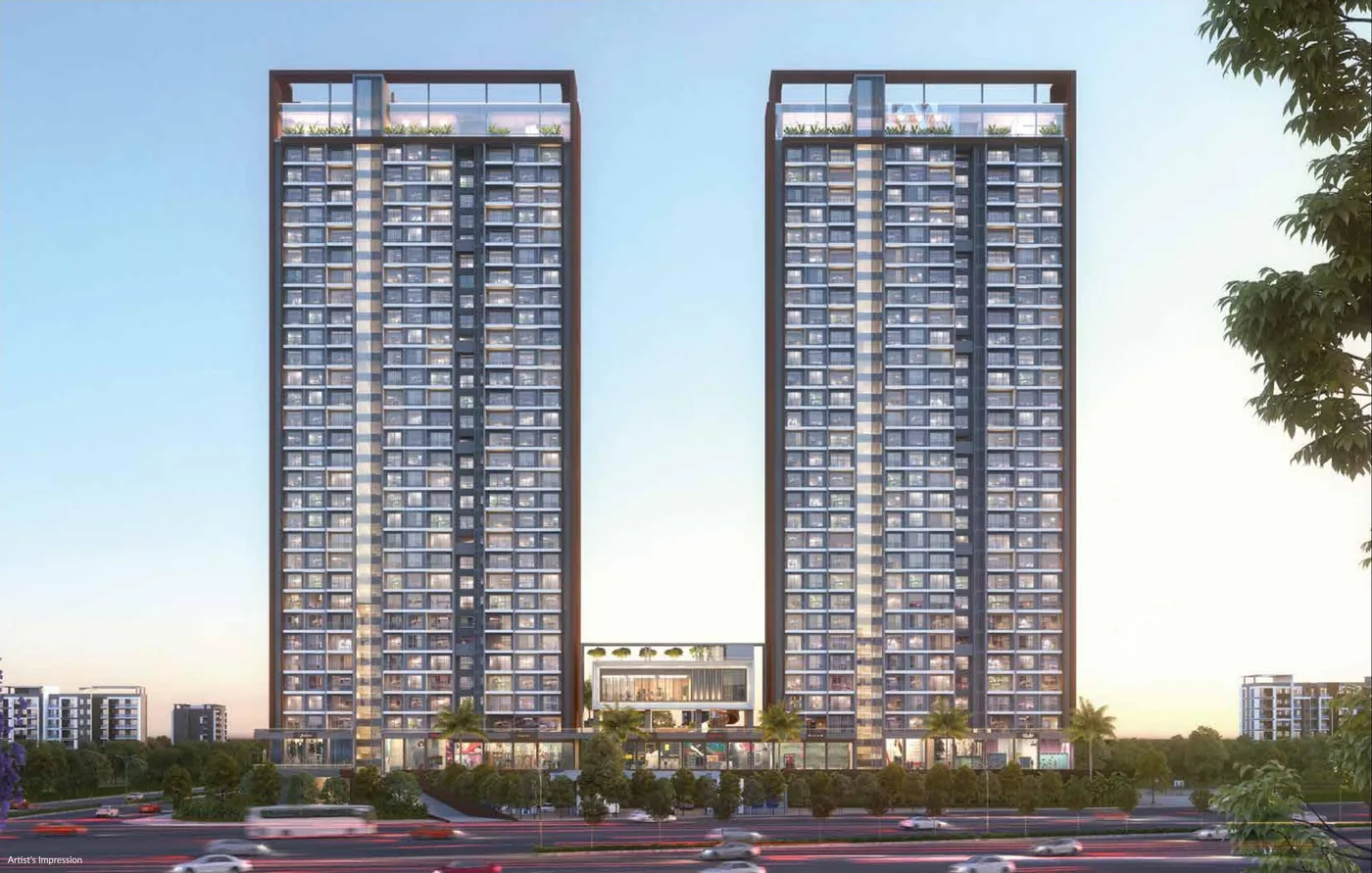 Ready To Move
Rama Group
Metro Life Ultima Residences
Tathawade, Pune
₹14,200,000
starting3 BHK Comfort XL · 3 BHK Grande · 3 BHK Grande XL · 4 BHK Grande · 4 BHK Grande XL
MahaRERA P52100051679
Verification & provenance
Sources: AB Housing verified research, accessed 2026. MahaRERA portal is the primary verification source for project registration.
Claim check: Stamp duty and registration figures are indicative for Pune and PCMC municipal limits and must be confirmed at the sub-registrar office before payment. GST treatment depends on the Occupancy Certificate status of the specific project.
Last reviewed
Continue reading