

Quick answer
NRIs can buy residential and commercial property in Pune without RBI approval, paying through NRE, NRO or FCNR banking channels with a PAN. Stamp duty is 6% for men and 5% for women plus 1% registration capped at Rs.30,000, and on resale the proceeds must go to an NRO account with repatriation capped at USD 1 million per financial year.
An NRI can buy residential or commercial property in Pune without any RBI approval, provided the payment comes through banking channels from an NRE, NRO or FCNR account. The purchase itself is straightforward. What trips most buyers up is everything around it: the power of attorney, the TDS position when they sell, and the USD 1 million annual limit on taking money back out.
This guide walks through the full cycle - buying, holding, and eventually selling and repatriating - with the rules as they stand in 2026. For the transaction costs on the day of registration, read our Pune stamp duty guide.
Quick answer: Yes, NRIs and OCIs can buy residential and commercial property in India. Pay only through NRE, NRO or FCNR banking channels, hold a PAN, and register the sale deed with 6% stamp duty (male) or 5% (female) plus 1% registration capped at Rs.30,000. On resale, sale proceeds must land in an NRO account, and repatriation is capped at USD 1 million per financial year.
Can an NRI buy property in Pune?
Yes. A non-resident Indian or an Overseas Citizen of India can purchase residential and commercial property in India. No prior permission from the Reserve Bank of India is needed for a purchase. What is restricted is agricultural land, plantation property and farmhouses - those cannot be bought by a non-resident without specific approval.
Pune and PCMC are ordinary markets for an NRI buyer: the same MahaRERA registration applies, the same stamp duty applies, and the same sub-registrar process applies. There is no separate NRI quota, no separate price list, and no additional state levy.
| Property type | Can an NRI buy? | Notes |
|---|---|---|
| Residential flat or villa | Yes | No RBI approval, standard stamp duty |
| Commercial shop or office | Yes | GST 12% if under construction, nil with OC |
| Agricultural land, plantation, farmhouse | No | Requires specific RBI approval; not a normal route |
| Inherited property | Yes | Can be held; sale proceeds follow the NRO repatriation route |
How must an NRI pay for the property?
Only through banking channels. The money must come from an NRE account, an NRO account, an FCNR account, or a direct inward remittance in foreign exchange. Cash is not permitted, and a traveller's cheque is not an acceptable instrument for a property purchase.
The account you pay from decides how easily you can take the money out later, so decide before you transfer, not after you sell:
| Funding source | Repatriation on sale |
|---|---|
| NRE or FCNR account | The original investment can be repatriated in full, for up to two residential properties. Commercial property is not subject to that two-property restriction. |
| NRO account (rupee funds) | Capped at USD 1 million per financial year, after applicable taxes. Anything above needs RBI approval through your bank. |
A detail most buyers miss: the funding source protects the principal, but the appreciation usually still falls inside the USD 1 million annual limit. Keep every remittance advice, FIRC and bank statement from the purchase - an authorised dealer will ask for them years later.
What is the step-by-step process?
- Get a PAN. It is mandatory for the purchase, the registration and every tax filing that follows.
- Open or activate NRE and NRO accounts. Most buyers need both - NRE for the purchase, NRO for rent and sale proceeds.
- Shortlist only MahaRERA-registered projects. Check the registration number, the tower-wise completion date and the promoter's past projects on the MahaRERA portal.
- Appoint a power of attorney if you cannot travel. Get it notarised and apostilled in your country of residence, and preferably adjudicated in India.
- Pay the booking amount from your NRE or NRO account. Never from a relative's account, and never in cash.
- Sign the agreement for sale. Read the carpet area, the parking allocation, the possession date and the delay clause.
- Pay stamp duty and registration. 6% for a male buyer, 5% for a female buyer, 5.5% for joint ownership, plus 1% registration capped at Rs.30,000.
- Collect the registered deed and the index copy. Store them with the payment trail - you will need both at resale.
For a ready unit, add one more step: verify the Occupancy Certificate before you pay the final instalment. Without it, the flat is not legally occupiable and the GST position changes.
What does the purchase cost an NRI?
Exactly the same as a resident buyer, with one addition - the TDS you must deduct if you are buying from a resident seller for Rs.50 lakh or more.
| Head | On a Rs.1 crore flat |
|---|---|
| Agreement value | Rs.1,00,00,000 |
| Stamp duty 6% (male buyer) | Rs.6,00,000 |
| Registration (1%, capped) | Rs.30,000 |
| GST - under construction | Rs.5,00,000 |
| GST - ready with OC | Nil |
| TDS to deduct (resident seller, Rs.50 L+) | 1% of consideration |
The ready-versus-under-construction GST gap is worth reading in full before you choose a project - our comparison of the two sets out the all-in difference.
Do I need a power of attorney?
Only if you cannot be physically present for the agreement and registration. A special power of attorney limited to this one property is safer than a general one. Execute it before a notary in your country of residence, get it apostilled (or consularised, depending on the country), and have it adjudicated in Maharashtra so the sub-registrar accepts it without argument.
Draft the powers narrowly: to execute the agreement, to pay stamp duty and registration, to appear before the sub-registrar, to collect the registered deed, and to do the society transfer. Do not hand over the power to sell or to withdraw funds unless you genuinely intend it.
Can an NRI get a home loan in Pune?
Yes. Most Indian banks and housing finance companies lend to NRIs for a residential purchase, and some lend against commercial property. Expect the lender to ask for your passport and visa, overseas address proof, income documents from your country of residence, NRE or NRO statements, and a power of attorney if you will not sign in person.
The loan is repaid from your NRE or NRO account, and the tax deduction on the interest is available subject to your residential status and the applicable rules - confirm that with your chartered accountant rather than a bank relationship manager.
What changes when you sell?
This is where the NRI transaction differs sharply from a resident one. Three things change:
- TDS applies from the first rupee. There is no Rs.50 lakh threshold when the seller is an NRI. The buyer must deduct tax on the entire consideration.
- The rate is the capital gains rate, not 1%. For a long-term gain on property held more than 24 months and transferred on or after 23 July 2024, TDS is 12.5% plus surcharge and cess. For a short-term gain it is the slab rate, up to 30% plus surcharge and cess.
- Proceeds must be credited to an NRO account. Even if you hold an NRE account, FEMA requires Indian-source sale proceeds to land in NRO first.
A lower deduction certificate from the assessing officer can reduce the upfront TDS if your actual gain is smaller than the gross sale value - which it almost always is. Apply for it well before the deed date, or you will fund a large refund claim for months.
From 1 October 2026, a resident individual or HUF buying from an NRI can deposit TDS using their PAN instead of obtaining a TAN. The deduction obligation itself does not change - only the paperwork does.
How do you repatriate the money?
Through an authorised dealer bank, with a self-declaration and a chartered accountant's certificate confirming Indian tax compliance. Under the current rules the old Form 15CA and 15CB have been replaced by Form 145 and Form 146.
| Situation | What you can remit |
|---|---|
| Property bought with NRE or FCNR funds | The original foreign-exchange investment, in full, for up to two residential properties |
| Property bought with NRO or rupee funds | Up to USD 1 million per financial year, after taxes |
| Inherited property | Up to USD 1 million per financial year, with documentary proof of inheritance |
| Above USD 1 million in a year | Prior RBI approval through your bank |
Two practical points. First, the USD 1 million cap applies per person per financial year, so a spouse who also holds NRI status has their own limit. Second, if the property was bought jointly, the funding trail for each holder needs to be documented separately.
What about tax on rent?
If you let out the flat, the tenant is the deductor. A tenant paying rent to an NRI must deduct tax at source under the non-resident provisions - commonly 30% plus surcharge and cess on the rent, unless you obtain a lower or nil deduction certificate. The rent is also taxable in India in your hands, with deductions available for municipal tax, standard deduction and home loan interest.
The rent should be credited to your NRO account, not NRE. Plan for the withholding from month one rather than discovering it at the end of the year.
Five mistakes NRI buyers make in Pune
- Paying from a relative's Indian account. It breaks the FEMA trail and can block repatriation years later.
- Booking before checking MahaRERA. The registration number, the tower-wise date and the promoter's record are all public.
- Signing a broad power of attorney. Limit it to the specific transaction and the specific property.
- Forgetting the Occupancy Certificate. Without it, a ready flat is neither legally occupiable nor GST-free.
- Not planning the exit at entry. Decide NRE versus NRO funding before you pay the booking amount, because it decides how much you can take back.
Frequently asked questions
15 detailed FAQs below. Related reading: stamp duty and registration in Pune and the best locations to buy a flat. Tax positions change; confirm your own with a chartered accountant before you transact.
FAQs
Frequently asked questions
Can an NRI buy property in Pune without RBI approval?
Yes. NRIs and OCIs can buy residential and commercial property in India without prior RBI approval. Agricultural land, plantation property and farmhouses are restricted. Read the related AB Housing guide →
How should an NRI pay for a property in India?
Only through banking channels - an NRE, NRO or FCNR account, or a direct inward remittance in foreign exchange. Cash and traveller's cheques are not permitted for a property purchase. Read the related AB Housing guide →
Is PAN mandatory for an NRI buying property?
Yes. A PAN is required for the purchase, the registration and every tax filing that follows, including the TDS return when you sell. Read the related AB Housing guide →
What stamp duty does an NRI pay in Pune?
The same as a resident buyer - 6% for a male buyer, 5% for a female buyer and 5.5% for joint ownership, including the 1% metro cess, plus 1% registration capped at Rs.30,000. Read the related AB Housing guide →
Does an NRI need a power of attorney to buy in Pune?
Only if you cannot be present for the agreement and registration. Use a special power of attorney limited to this property, notarised and apostilled abroad and adjudicated in Maharashtra. Read the related AB Housing guide →
Can an NRI get a home loan in India?
Yes. Most banks and housing finance companies lend to NRIs against a residential purchase, repaid from NRE or NRO accounts. Expect to submit overseas income documents and a power of attorney if you will not sign in person. Read the related AB Housing guide →
How much TDS applies when an NRI sells property?
TDS applies from the first rupee, with no Rs.50 lakh threshold. For a long-term gain on property held over 24 months and transferred on or after 23 July 2024, it is 12.5% plus surcharge and cess; for a short-term gain it is the slab rate. Read the related AB Housing guide →
Can an NRI seller reduce the TDS?
Yes, by applying for a lower deduction certificate from the assessing officer before the sale deed. It is based on the estimated capital gain, which is usually far lower than the gross sale value. Read the related AB Housing guide →
Verified projects
Projects covered in this guide
 Ready To Move
Rama Group
Rama Barcode
Moshi, Pune
₹4,500,000
startingRetail Shop · Office Space · Rooftop Restaurant
MahaRERA P52100026713
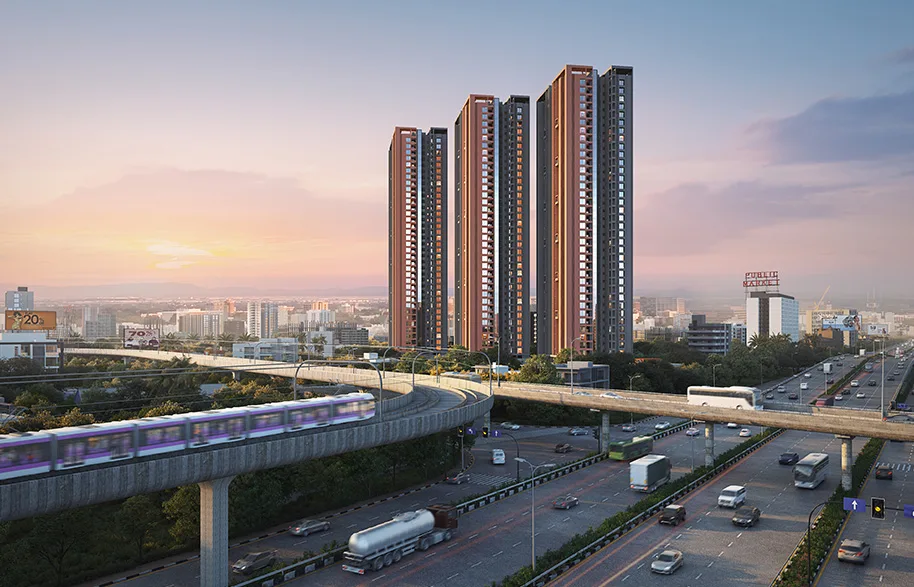 Ongoing
ANP Corp
ANP Ultimus Wakad
Wakad, Pune
₹11,000,000
starting2 BHK · 2.5 BHK · 3 BHK · 3.5 BHK
MahaRERA P52100047835
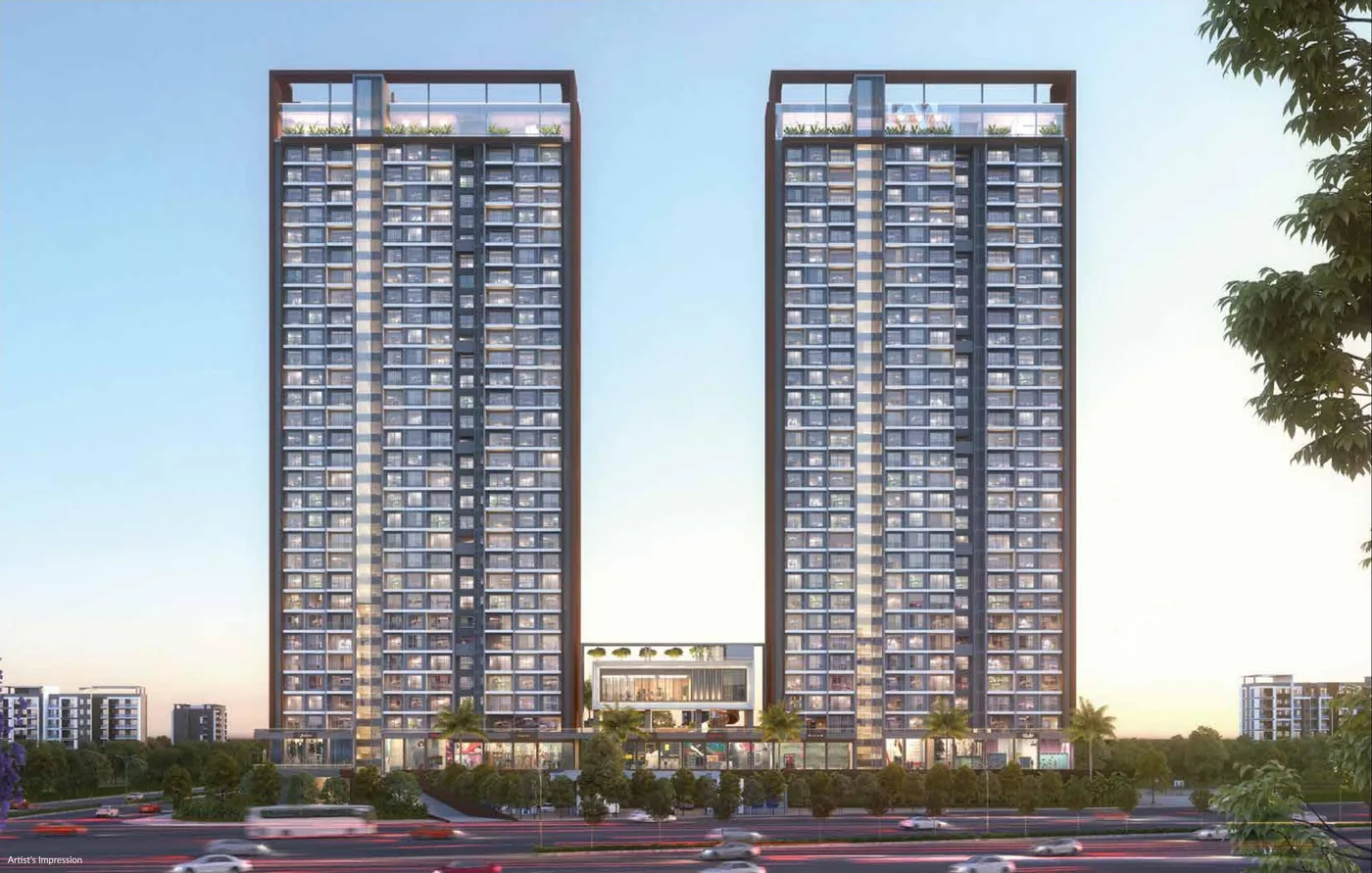 Ready To Move
Rama Group
Metro Life Ultima Residences
Tathawade, Pune
₹14,200,000
starting3 BHK Comfort XL · 3 BHK Grande · 3 BHK Grande XL · 4 BHK Grande · 4 BHK Grande XL
MahaRERA P52100051679
Verification & provenance
Sources: AB Housing verified research, accessed 2026. Reserve Bank of India guidance and the MahaRERA portal are the primary verification sources.
Claim check: Tax and FEMA positions reflect published rules as of 2026 and can change. Figures are indicative and must be confirmed with a chartered accountant and the authorised dealer bank before transacting.
Last reviewed
Continue reading